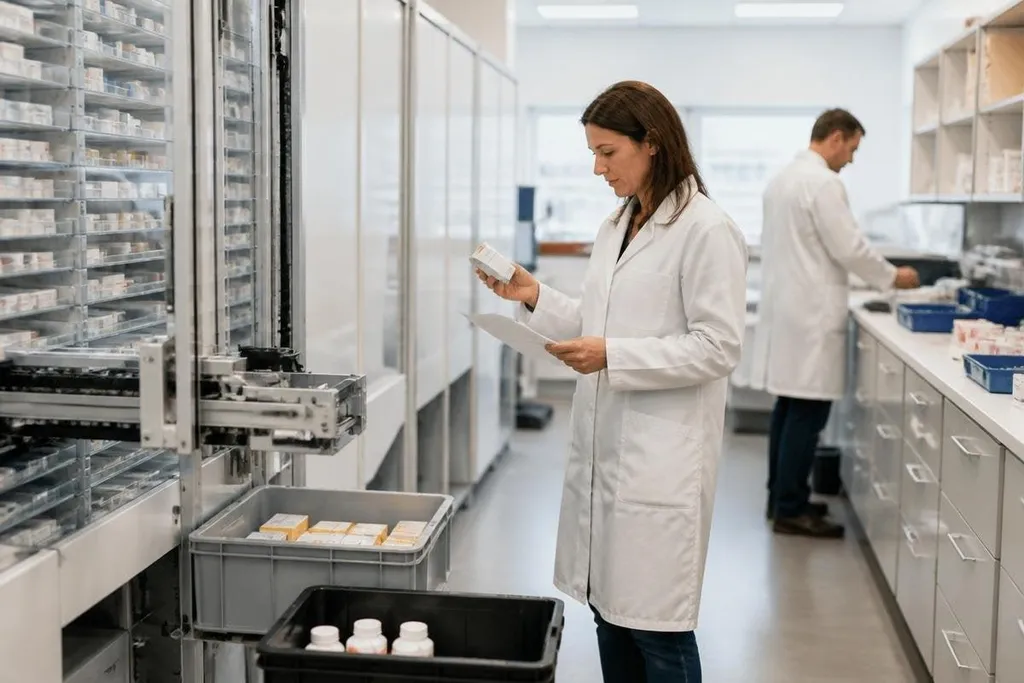
A pharmacy robot earns its place only when it can handle the work around a prescription, not only move a package from one shelf to another. For a pharmacy manager, the useful question is how the system checks orders, handles exceptions, and records each action.
- The robot should show its checks, not hide them behind a dashboard.
- Staff still need a clear way to stop, inspect, and correct the system.
- A pilot should measure errors, delays, and staff time before wider use.
Start with the full order path
A dispensing robot sits inside a longer process. An order arrives, a product is selected, the package is checked, and the item reaches a pharmacist or patient. Any weak link can slow the whole task.
That makes the handoff worth close attention. The robot should show which order it received, which package it picked, and when a person checked the result. A screen that shows only “complete” leaves too much work for staff.
The same rule applies to stock work.
A useful system should show where an item came from, how many units remain in that location, and what happens when the expected package is missing. Those records help staff find the cause of an error instead of searching through the whole process.
The robot must handle exceptions
Pharmacy work includes packages that look alike, damaged labels, missing stock, and orders that need a person’s decision. A system built only for clean, repeated movements will stop when the room stops matching its training examples.
For that reason, the purchase test should include difficult cases. Ask the supplier to show how the robot reacts when a barcode will not read, a drawer is empty, or the item in its grip does not match the order record.
The safe response is clear: stop the task, report the problem, and wait for a named staff member. A robot that keeps moving after a failed check creates a problem the pharmacist must trace later.
Pharmacy managers comparing systems need records that separate a staged demo from a live deployment. Robot24.com pharmacy robotics reporting can place the robot’s task, test setting, and staff response beside each claim. That gives the next section a practical test for the word “smart”: what does the system do when a pharmacist still has to watch it?
What “smart” should mean here
A supplier may describe a robot as smart because it can identify objects or adjust its motion. For a pharmacy, that label matters less than the records behind each decision.
The useful signs are plain. The system should log failed reads, show why an order stopped, and let staff correct a record without hiding the original entry. It should also make clear which actions the robot took and which actions a person approved.
Software changes need the same care as hardware. Ask how updates are tested, who can install them, and how the pharmacy returns to the last working version if a change causes trouble. The answers belong in the purchase file before the robot handles live orders.
I’d skip any pharmacy robot whose supplier can show only a smooth video and a list of features. A clean demo says little about the cases that decide safety and staff workload.
A practical buying check
Use this list before moving from a product meeting to a pilot:
- Trace each order: Can staff see the order, item check, handoff, and person who approved it?
- Test failed reads: What does the robot do when a barcode or label cannot be read?
- Test missing stock: Does it stop with a clear message when the expected package is absent?
- Check corrections: Can an authorized staff member fix a record while keeping the original entry?
- Set pilot measures: Track error reports, stopped tasks, delay time, and staff minutes per order.
- Define the stop rule: Decide which results end the pilot before the system handles more orders.
Those points turn a broad automation pitch into a test that a pharmacy team can run. They also make supplier claims easier to compare, because each company must answer the same operating questions.
What happens after the pilot
The next step should follow the measured result, not the strongest sales claim. If the robot reduces repeated handling while its exception records stay clear, the pharmacy has a reason to test a wider workload.
If staff spend their time correcting missing records or restarting stopped tasks, the system needs more work before expansion. The deciding evidence is the pilot log: how many orders ran, how many stopped, and how long people spent fixing them.